A Two-Layer Secret Defense for Git and Atlassian
One incident, two copies
During a deployment, a developer updates an encrypted environment vault in git. A teammate cannot decrypt it yet, so someone pastes the plaintext value into Jira “just for tonight.” The intentional delivery path is protected; the emergency communication path has bypassed it.
Security architecture often draws git, CI, Jira, and Confluence as separate boxes. Engineers treat them as one workspace. Credentials follow the human workflow across all of them.
GitGuardian’s State of Secrets Sprawl 2025 reports 23,770,171 new hardcoded secrets added to public GitHub repositories in 2024 after scanning 69.6 million public repositories. The same report says 38% of incidents in collaboration tools in its internal monitoring data were classified highly critical or urgent. These datasets cannot estimate the probability for one organization, but they establish that both surfaces produce consequential findings.
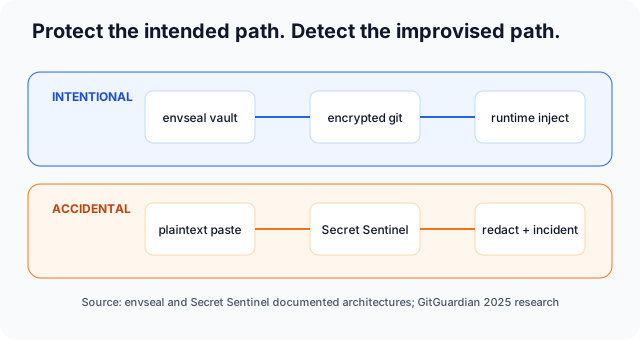
Layer one: make the intended path safe
The normal route should be faster than pasting plaintext. envseal encrypts .env
values independently to recipient keys, stores ciphertext in git, and injects values at runtime.
It removes a vendor cloud from the delivery path and preserves a focused diff when one value
changes.
Repository controls still matter: scan before push, review recipient changes, keep plaintext files ignored, and prefer workload identity or dynamic credentials when the platform supports them. Encrypted static secrets are one design option, not the universal endpoint.
Layer two: catch the path people improvise
Incident pressure creates exceptions. Logs, screenshots, comments, and runbooks can contain a credential that never entered git. Secret Sentinel scans supported secret formats in Jira and Confluence, redacts matches, classifies risk by exploitability, and can create Jira incidents for high-risk findings. Because it runs on Forge without an external service, the scanner does not add a vendor processing boundary for the content it inspects.
Detection is not revocation. Every confirmed exposure needs an owner and provider-side response. The shared incident workflow should record the surface, affected consumers, replacement rollout, old-key revocation, old-key failure, and follow-up control.
Test the seams
Run a tabletop exercise with synthetic, unmistakably fake credentials. Place them in a test git change, a Jira description and comment, and a Confluence page and comment. Verify prevention or detection, redaction behavior, escalation routing, and audit evidence. Do not use real keys, and do not infer one surface’s coverage from another’s successful test.
Then test the human escape hatch: can a new engineer obtain approved access without asking for a plaintext paste? Conversion and security align here. A tool that makes the safe path immediate reduces friction; a scanner that repairs inevitable mistakes builds confidence that one rushed comment will not remain a permanent credential archive.
Frequently asked questions
Do we need both git secret controls and Jira or Confluence scanning?
If engineers use both surfaces, yes. A repository scanner cannot inspect a token pasted only into a Jira comment, while an Atlassian scanner does not govern encrypted configuration or commits in git.
What should happen after Secret Sentinel redacts a credential?
Treat the credential as exposed, assign an owner, revoke or rotate it at the provider, update consumers, verify the old value fails, and review logs for misuse.